This important book is a comprehensive interdisciplinary scientific treatise that introduces revolutionary new knowledge achieved by competent use of the scientific method. The research on which it is based has been more thoroughly and critically reviewed than is usual for scientific works and the international edition has recently been published.
A new catalyst material developed by chemists at MIT provides key insight into the design requirements for producing liquid fuels from carbon dioxide, the leading component of greenhouse gas emissions. The findings suggest a route toward using the world’s existing infrastructure for fuel storage and distribution, without adding net greenhouse emissions to the atmosphere.
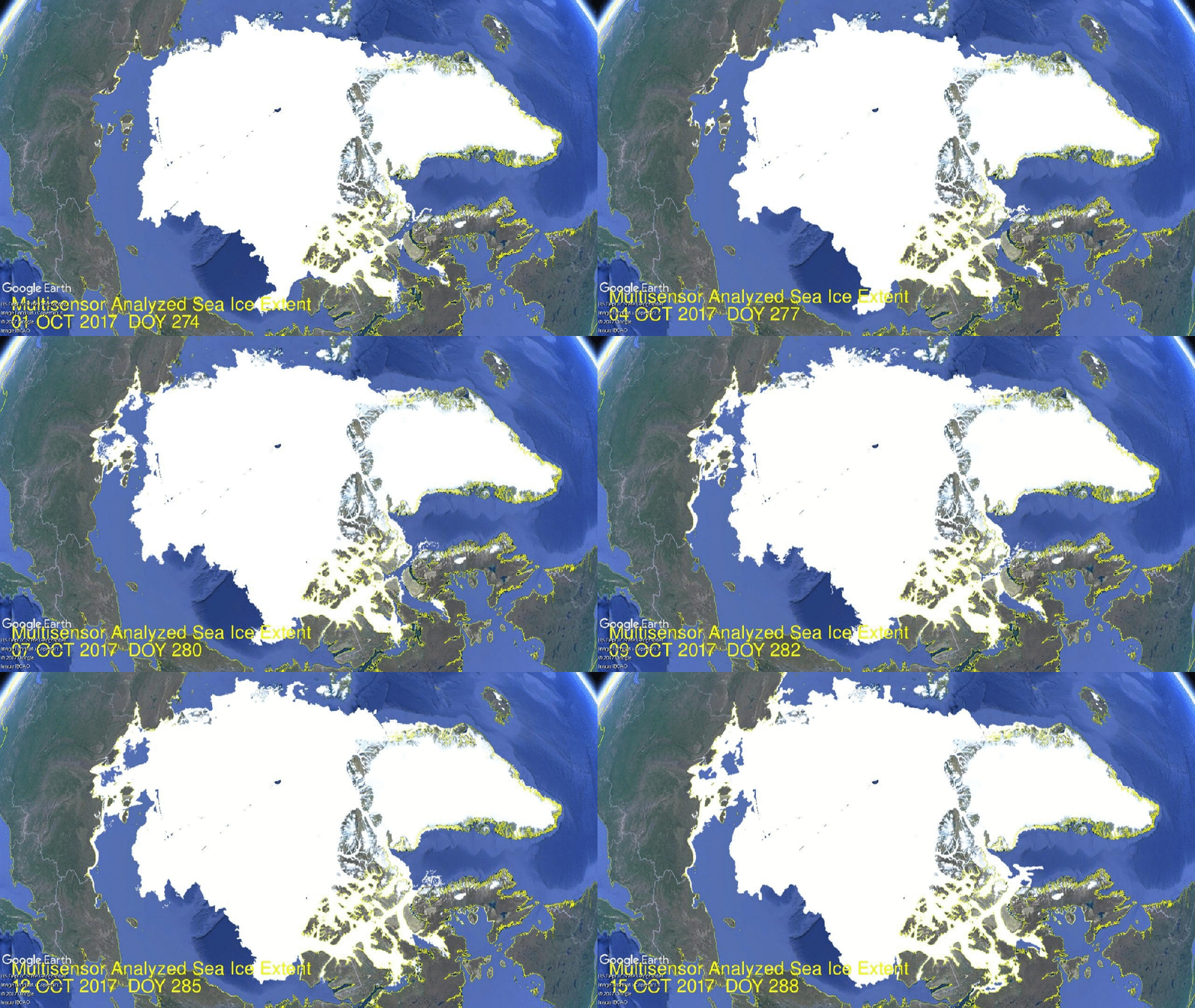
Consider the refreezing during the first half of October through yesterday, adding an average of 96k km2 per day. On the left side, the Laptev Sea has filled in, and just below it, the East Siberian Sea is also growing fast ice from the shore to meet refreezing drift ice.
CLIMATE alarmism is a gigantic fraud: it only survives by suppressing dissent and by spending tens of billions of dollars of public money every year on pseudo-scientific propaganda.
Most people have heard of the Great Chicago Fire of 1871, but there were much worse fires burning at that time. Thousands of people were killed by massive fires in Wisconsin, Michigan, and Ontario. There were also huge fires burning in the Rocky Mountains.
2017 saw the first major hurricanes strike the continental U.S in Texas and Florida in almost 12 years, with multiple Caribbean islands, including Puerto Rico, suffering major hurricane damage. Certainly hurricanes Harvey, Irma, and Maria will be long remembered by residents of the respective devastated areas.
Scientists, identified as “conservation scientists” who presumably oppose human greenhouse gas emissions, have looked into their own lifestyles, as well as the lifestyles of other “conservation scientists,” and found that they are preaching one thing while practicing another.
What seemed impossible decades ago is now true: When they make landfall, big hurricanes aren’t killing many people. Only truly exceptional storms — or more likely exceptionally poor preparedness — spawn large numbers of fatalities in the United States when one comes ashore. The big death tolls are now from flooding, often days later.
The Center for the Study of Carbon Dioxide and Global Change posts a new video, along with links to 15 recent articles, demonstrating carbon dioxide (CO2) has crucial positive benefits to life on earth.
Coal is dead. Coal mining is a sunset industry. Donald Trump is crazy if he thinks he can revive Big Coal. While all these statements have become part of global consciousness when it comes to the future of the much-maligned ‘fossil fuel,’ a report by Urgewald, a Berlin-based environmental group, casts doubt on at least the first two assertions.
I’ve been reading a new book, “Green Tyranny,” just out from Encounter Books, written by a Brit named Rupert Darwall. The overriding theme is that the project to transform society by doing away with fossil fuels is fundamentally inconsistent with the basic American ideals of freedom and democracy.
In a thought-provoking and reasoned commentary that asks the question, “Is climate change controversy good for science? Craig Idso examines a comparison between the Intergovernmental Panel on Climate Change (IPCC) and the Non-Intergovernmental Panel on Climate Change (NIPCC) Reports. (Disclosure: I contributed material to the NIPCC Report).
We are not used to the idea of machines making ethical decisions, but the day when they will routinely do this – by themselves – is fast approaching. So how, asks the BBC’s David Edmonds, will we teach them to do the right thing?