With preparations under way for the Intergovernmental Panel on Climate Change’s next report, a key challenge for scientists remains to explain properly the 20- year slowdown in surface temperature rises and the failure of models to predict it.

Written by The Australian
With preparations under way for the Intergovernmental Panel on Climate Change’s next report, a key challenge for scientists remains to explain properly the 20- year slowdown in surface temperature rises and the failure of models to predict it.
Written by Tony Heller

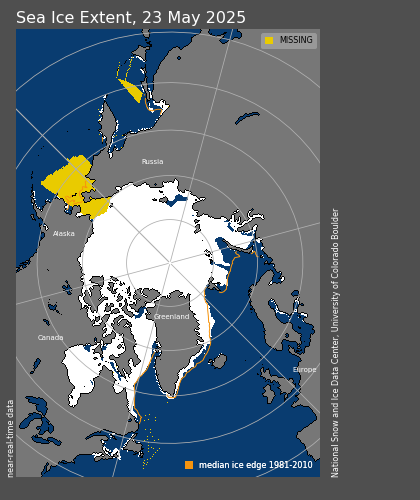
Climate experts promised us an ice-free Arctic in 2017, but with cold weather forecast over the Beaufort Sea in a week, and only 60 days left to the melt season, that might be rough.
Written by Rhett Jones

The beleaguered honey bee is normally championed for its vital powers of pollination but a new study shows that we could soon be thanking them for inspiring more accurate color imaging in digital photography.
Written by Kate Seamons

Researchers call it one of the “last frontiers of human colonization”: very high elevations where the oxygen is sparse and the temperatures are icy. Now research out of the Andean highlands of South America suggests the humans who braved such conditions more than 7,000 years ago did so in an impressive manner—year-round.
Written by Hayley Dunning

Scientists reveal the first detection of a molecule from Enceladus with a ground-based telescope, with implications for the search for life.
Written by Emma Grey Ellis

LAST JULY 4TH, NASA’s Juno spacecraft slowed its record-breaking pace just enough to get caught in the pull of Jupiter‘s gravity. (The timing, according to NASA, was just a very patriotic coincidence.) Either way, Independence Day 2016 was the last time the Juno mission pumped its brakes. In the year since the 66-foot solar-powered craft has given scientists more and weirder Jupiter data than they ever thought possible.
Written by Traci Watson

Today’s Madagascar is the land of lemurs, big-eyed creatures among the most huggable on the planet. But no one would want to hug the beast that once ruled this landscape.
New fossils reveal that 170 million years ago, a giant crocodile with serrated teeth like a Tyrannosaur Rex haunted Madagascar. Powerful jaws and sharp-edged teeth signal it was an uber-predator. Even the advanced meat-eating dinosaurs called theropods weren’t immune.
Written by Matt Reynolds

Oi, AI – what do you think you’re looking at? Understanding why machine learning algorithms can be tricked into seeing things that aren’t there is becoming more important with the advent of things like driverless cars. Now we can glimpse inside the mind of a machine thanks to a test that reveals which parts of an image an AI is looking at.
Written by PSI Staff

Non-partisan (and some sarcastic souls) have been asking the question: why doesn’t an honest scientist come forward to debunk the man-made greenhouse gas effect (you know, that BS that underpins climate alarm)? Well, believe it or not, he (and others) have.
Written by Tony Heller
The short polar melt season is almost half over and hasn’t actually begun yet.

Written by Janice Ponce de Leon

If you’re one of those who feels it’s hotter this summer than last year, then you’re wrong. Probably it’s your mind that’s playing tricks on you because the heat and humidity are relatively the same this year compared to summer months past, forecasters said.
Written by Andrew Follett

Solar panels create 300 times more toxic waste per unit of electricity generated than nuclear power plants, according to a Thursday report from the pro-nuclear group Environmental Progress (EP).
Written by NASA

A venerable U.S./European oceanography satellite mission with NASA participation that has expanded our knowledge of global sea level change, ocean currents and climate phenomena like El Niño and La Niña will take on an additional role next month: improving maps of Earth’s sea floor.
Written by Mike Wehner

At one point in our history, the most impressive example of artificial intelligence was a computer that was really, really good at chess. Today, various pieces of software can do everything from a chat with us on Facebook Messenger to guiding the Mars rover Curiosity while its human engineers catch a nap. Now, a team of scientists from Carnegie Mellon University has developed an AI that can do something once thought impossible: read the human mind.
Written by Dakin Andone

Humanity could face one less doomsday scenario if NASA has its way. On Friday, the space agency announced plans to redirect the course of a small asteroid approaching Earth, as part of the Double Asteroid Redirection Test (DART), according to a NASA press release.
Written by Jet Propulsion Laboratory

Just days after celebrating its first anniversary in Jupiter orbit, NASA’s Juno spacecraft will fly directly over Jupiter’s Great Red Spot, the gas giant’s iconic, 10,000-mile-wide (16,000-kilometer-wide) storm. This will be humanity’s first up-close and personal view of the gigantic feature—a storm monitored since 1830 and possibly existing for more than 350 years.